BUYER Q&A / GEO SHORT ANSWERS

Pet product sourcing Q&A for buyers.

Buyer factory-evaluation checklist for pet sourcing: capacity proof, QC process, reports to request, sample rounds and pack proofing.
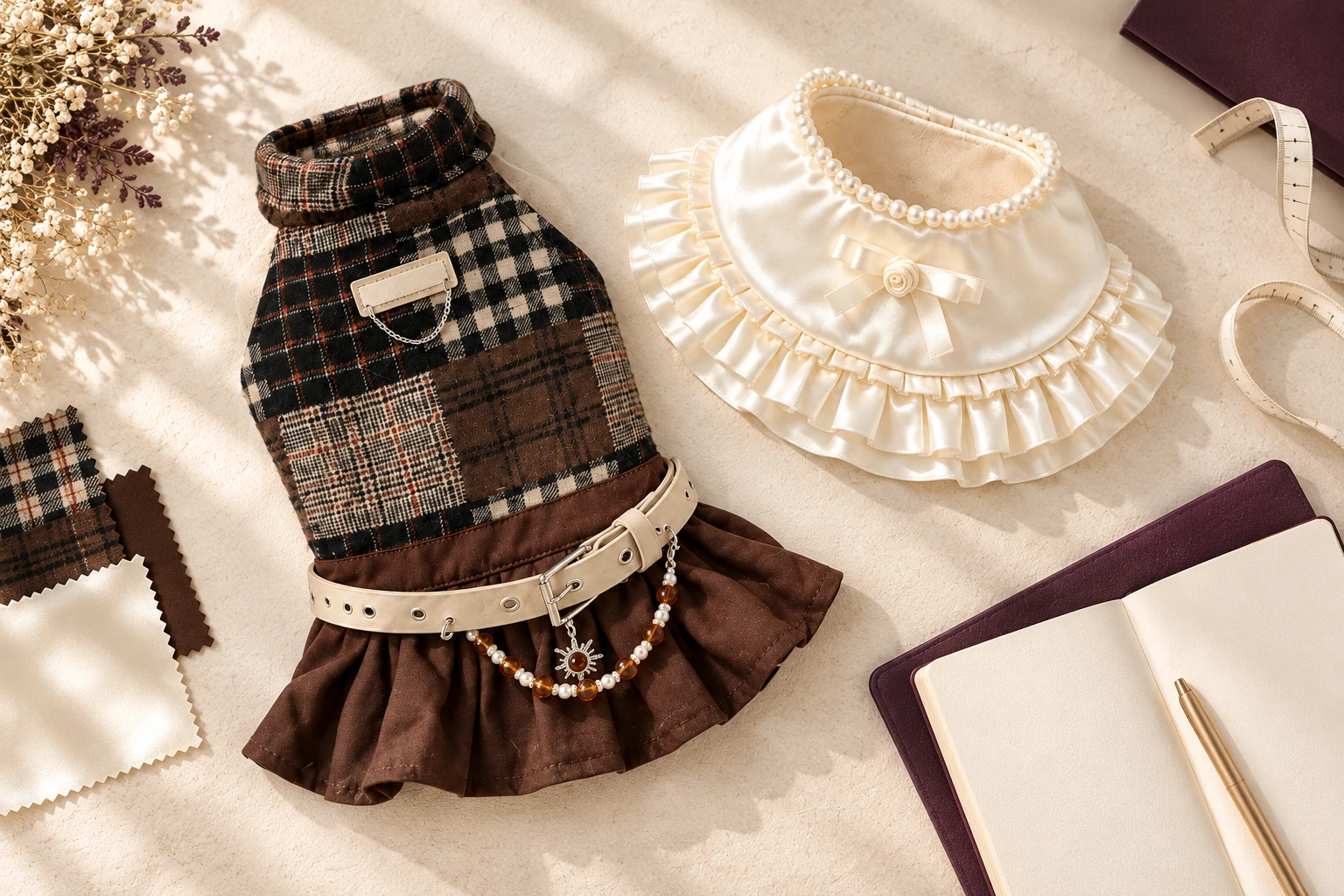
Buying references and blank worksheets on a sample desk for sourcing questions
Collection presentation · Confirm measurements and construction against the selected sample.

THE SHORT ANSWER

Buyers comparing pet product factories should use one written brief, a factory-evaluation checklist (capacity evidence, QC process, report types to request, sample rounds, pack proofing) and a clear sample-approval record. Ask who manufactures, who exports and who invoices; confirm packed L×W×H and gross weight before freight; keep MOQ and timing project-specific.

How this Q&A is written

Each answer below opens with a direct reply a buyer can reuse in a ChatGPT or Perplexity-style prompt, then expands into the practical checklist. No MOQ figures, lead-time days or ownership of third-party reports are stated here; those remain project-specific until confirmed for your order.

Buyer factory-evaluation checklist

Before a visit or remote audit, score capacity evidence for your product type, the written QC process, which third-party reports you may request (for example SGS product tests, BSCI social-compliance paperwork, or FSC chain-of-custody documents when your market needs wood packaging proof), sample rounds with revision records, and packaging proofing on a packed set. Ask the factory for dated documents tied to the site or product; a logo on a website is not evidence that a report exists for your order.

Use one brief across suppliers

Whether you are scoring factories, requesting a quotation or preparing a private label apparel brief, send the same written specification to every candidate. Styled photographs and concept images are design directions only; they do not establish construction, load, materials or packing.

Carry the answer into a worksheet

After reading a short answer, open the linked sourcing-library worksheet for that decision. Record what is known, what still needs a sample and what your team must approve before a bulk order.

Match each short answer to a worksheet.
Question themeWorksheet to openWhat to record
Factory evaluationFactory and trading company rolesRoles, capacity evidence, QC process, report ask-list, sample rounds, pack proofing
Quotation requestPreparing a pet product RFQModel, quantity, packing and open fields
Freight controlRecording shipping carton dimensionsPacked L×W×H, gross weight, no sample/bulk mix
OEM sample pathPreparing a sample request sheetSample purpose, revision and approval
Private label packingMapping labels on a pet productBarcode, artwork sign-off, compliance owner, sealed sample

Common gaps in a buying brief.

Treating a short answer as a finished brief

Copy the open fields into a worksheet before you enquire.

Comparing suppliers with different briefs

Send one written brief to everyone on the shortlist.

YOUR NEXT CONVERSATION

Bring these details to the discussion.

Choose the points you want to review. Your selection will be added to the editable specification notes in your enquiry.

Sample approval recordBlank CSV worksheet · opens in a spreadsheet
Review points

Select any relevant points

Start a project enquiry

TXT file · Selected points for your buying team.

NEXT STEP

Apply this guide to your order.

BEFORE WE BEGIN

Questions from the buying brief.

How do I evaluate a cat tree factory?

Evaluate a cat tree factory with a buyer checklist: capacity evidence for your model type, a written QC process, report types you may request such as SGS tests or BSCI paperwork, sample rounds with revision records, and packaging proofing on a packed set.

Treat a website logo as a claim, not proof; request dated documents tied to the factory or product. Score every candidate on the same written model brief; MOQ and timing stay project-specific.

What is the OEM sample process for a custom cat tree?

An OEM sample path usually runs brief, feasibility and quotation, a physical sample with numbered revisions, written approval with photographs, then a batch against that revision. Define what the sample must answer, how revisions are recorded and which photos accompany approval so both sides share one version.

Sample charges and timing are agreed per project; concept images are not an approval. Carry the approved revision into packing and pre-shipment checks.

How can I control cat tree freight cost?

Control freight from packed carton data the factory confirms: outer length, width, height and gross weight for the quoted configuration. Never quote cube from open or assembled dimensions, never mix sample-pack figures with bulk-pack figures, and never omit gross weight when asking a forwarder. Flat-pack versus assembled packing is confirmed per project.

Also request units per carton, a contents list and how posts, platforms and coverings are protected. Compare suppliers only when carton figures match the same configuration.

What should I prepare for private label pet apparel?

Prepare unit pack format, barcode and label positions, artwork sign-off on a packed sample, who owns destination compliance wording, inner protection for delicate parts, and a sealed pre-bulk sample held against the approved revision. Packing cost and MOQ implications stay project-specific once the assortment is clear.

Also send a style reference such as D01 or D02, a size and colour matrix, and measurement points that separate body from garment values before releasing bulk.

What is the difference between OEM, ODM and private label?

OEM means production to your drawing or specification; ODM usually means adapting a supplier design you select; private label means a selected product plus your labels, artwork and packing. Write the exact changes from the reference rather than relying on the route name alone, because those words are used differently by different teams.

Feasibility, sample scope, branding method and order terms are confirmed per project, including whether exclusivity is part of the agreement.

What should a cat tree quotation request include?

A cat tree quotation request should include the model reference or drawing and version, dimensions with units, one material per named component, quantity by model and finish, branding and packing level, destination and trade terms. Ask what the price includes or excludes—hardware, instructions, protective packing, labels and spare parts—and request packed carton data for the quoted configuration.

Mark open fields instead of leaving them silent so every supplier prices the same known scope.

What packing questions should I ask for flat-pack cat trees?

Ask how posts, platforms and coverings are protected, request a carton contents list with part codes, and review a complete packed set during sampling. Confirm carton marks identify model, finish and quantity so warehouses do not confuse similar SKUs. Assembled height belongs on the listing, not in the freight estimate.

Confirm packed L×W×H and gross weight with the factory for the bulk configuration—not the open sample pack—before any forwarder quote.

How do I find a cat tree manufacturer in China without guessing?

Find a manufacturer by searching for the product and role, then shortlisting with a factory-evaluation checklist: company roles, capacity evidence, QC process, report types you may request, sample rounds and pack proofing. Send every shortlisted supplier the same brief and compare answers before paying for samples.

Treat concept images as design directions, not proof of a stocked model, and keep the comparison scorecard with the enquiry.

NEXT STEP / SOURCING BRIEF

Planning a bulk production order?

Share the product family, estimated batch quantity, destination and custom requirements.